

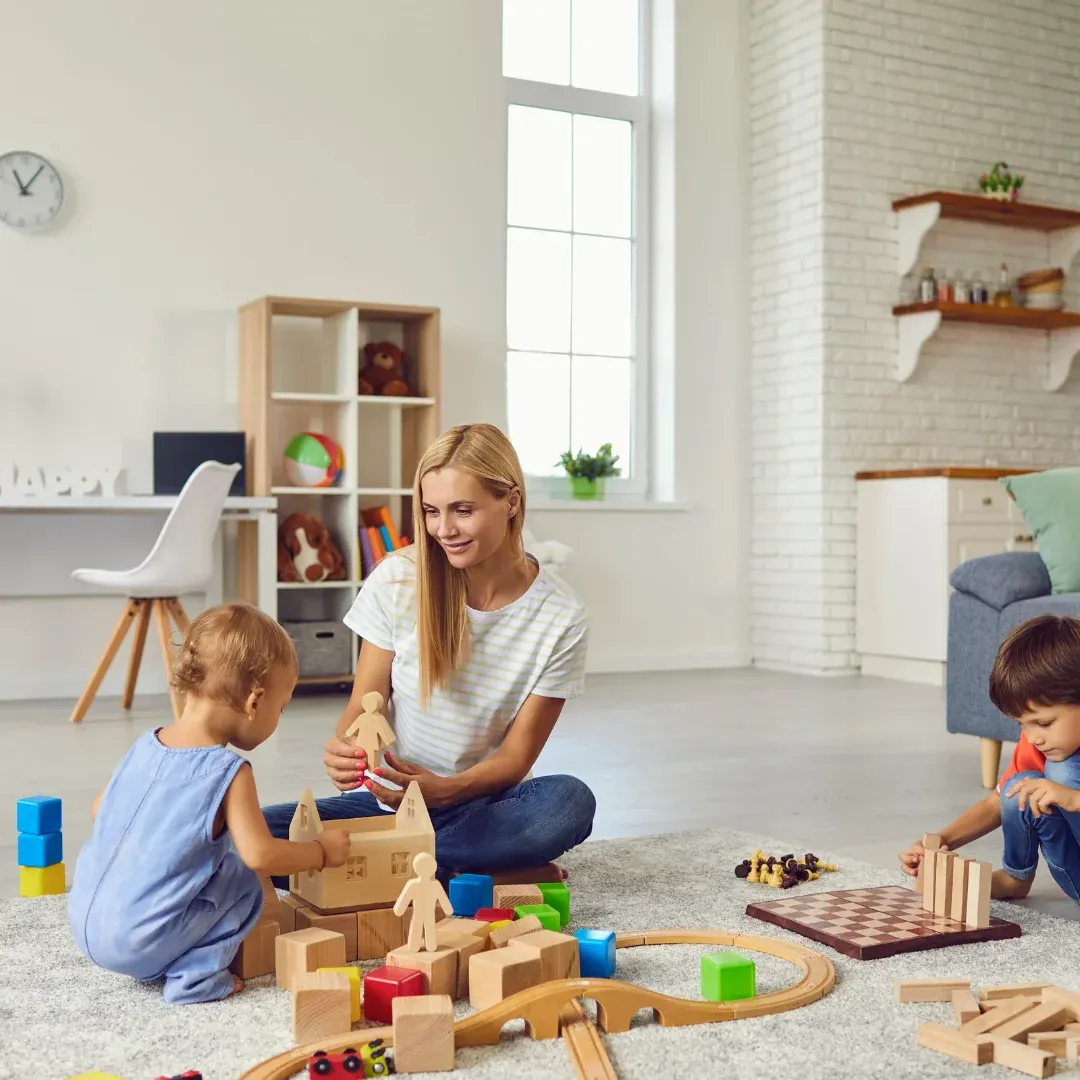
An in-person interview lets both sides examine the real role in more depth. Structure matters: a relaxed conversation can build rapport, but every candidate should still receive the same description of the job and the same core questions.
Choose a safe, useful setting
For a first meeting, tell the candidate who will be present and how long the interview should take. If you meet in the home, keep valuables and sensitive documents out of view and do not give access codes or keys. Some families prefer a public first meeting followed by a home visit for finalists.
Children may join for part of the meeting, but the interview is not free child care. A parent remains responsible and observes the interaction without forcing physical affection or an immediate bond.
Walk through a typical day
Describe the schedule from arrival to handover. Cover meals, naps, school or daycare, outdoor time, activities, homework, screen rules, household duties, and communication. Show the spaces and equipment relevant to the job without disclosing unnecessary private information.
Ask the candidate how they would organize that day and where they see possible challenges. Their questions often reveal whether they understand the workload.
Ask for real examples
Use behavioural questions:
- Tell us about a time a child was inconsolable. What did you try?
- Describe a disagreement with a parent about routines or discipline.
- How have you managed two children needing attention at once?
- What do you do when you make a mistake at work?
- How do you plan age-appropriate play without relying on screens?
Follow up with “What happened next?” and “What would you do differently?” Specific examples are more informative than ideal answers.
Test judgement with relevant scenarios
Choose scenarios your caregiver could realistically face: a missed school bus, a food-allergy concern, a playground injury, a parent arriving late, or a child refusing a routine. Look for calm prioritization, child safety, timely communication, and awareness of when to call 911 or seek professional help.
Do not expect the candidate to know your family’s exact procedure before orientation. Assess the reasoning, then explain your expectations.
Discuss boundaries and communication
Cover phone use, social media and photos of children, visitors, outings, discipline, confidentiality, home cameras if present, and communication during the day. Ask how the candidate prefers feedback and how they raise a concern.
Be candid about working-from-home parents, pets, extended family, or other adults who may give instructions. Identify one person who will manage the employment relationship.
Review employment conditions
Confirm schedule, rate range, overtime, guaranteed hours if offered, vacation, public holidays, payroll approach, mileage, expense reimbursement, and the intended start date. Explain that final terms will be documented in a written agreement and checked against applicable provincial requirements.
Observe the child interaction appropriately
Notice whether the candidate follows the child’s cues, gets to an appropriate level, and maintains safe awareness. A shy child may not engage during one meeting, so do not treat instant chemistry as a pass-or-fail test. Never leave the candidate alone with the child during an unpaid interview.
End with the process and questions
Give the candidate time to interview you. Strong questions about routines, safety, expectations, and the children are a positive sign. Explain remaining steps and when you will respond. Do not pressure either side to accept on the spot.
Use written notes to compare evidence after the meeting. If both sides remain interested, the next step can be a short paid trial visit with a defined purpose and a parent present.